Voitto Insights
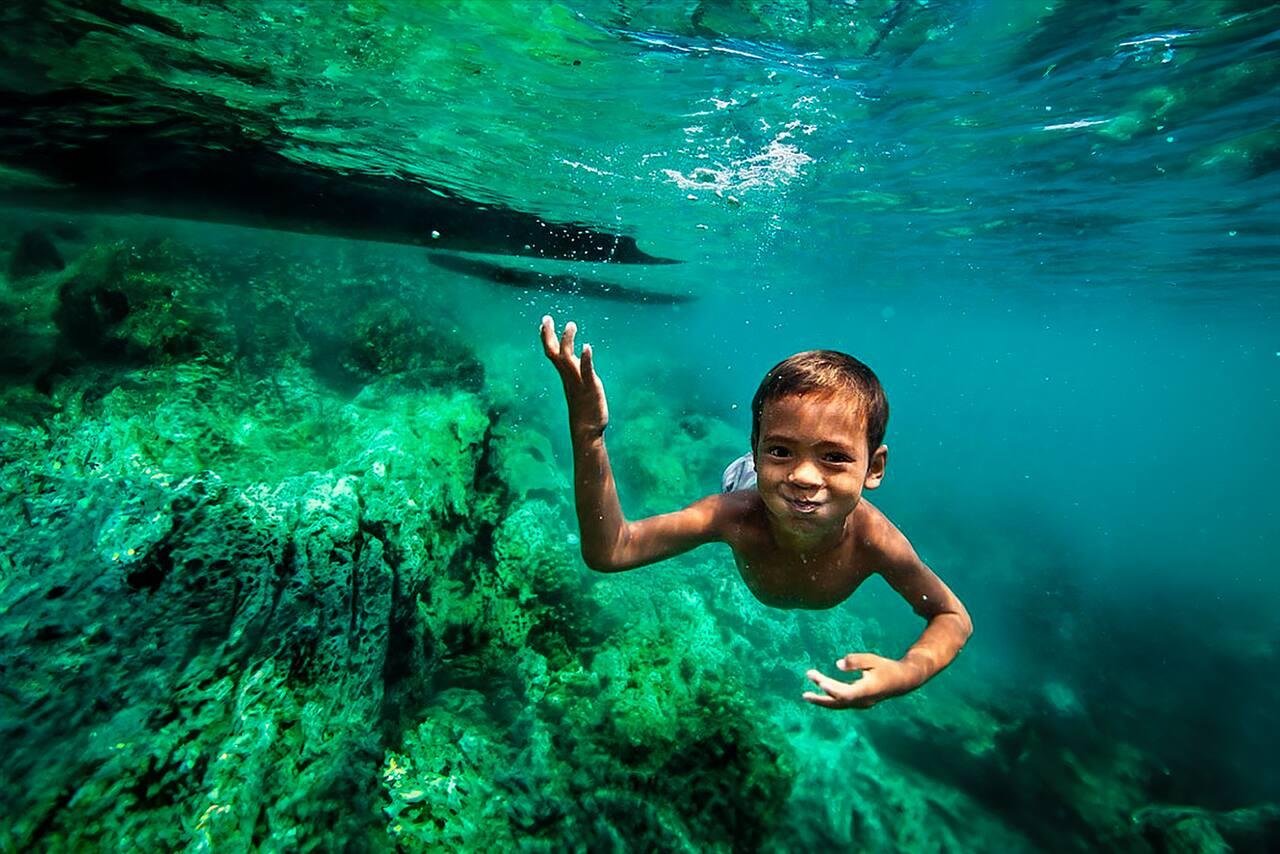
Some people dive deep into the ocean without oxygen tanks. Others thrive where the air contains far less oxygen. Some children see underwater with extraordinary clarity. And certain runners dominate long-distance races.
No, this is not the latest superhero casting announcement from Bollywood.
These are real human populations whose bodies and abilities reflect generations of adaptation to demanding environments.
The fascinating lesson is bigger than biology. It challenges how we think about talent, productivity, performance, business strategy, and even artificial intelligence.
We often treat our limitations as permanent. We say, “I’m not a morning person,” “I’m bad at numbers,” or “I’m not built for business.”
Meanwhile, human populations have spent generations adapting to conditions most of us would struggle to tolerate.
Their stories offer a fascinating mental model:
Your environment shapes your abilities. Change the environment, train the system, and your performance might change too.
Let’s explore the science, separate extraordinary facts from Instagram exaggeration, and uncover what entrepreneurs and ambitious people should learn from human adaptation.
First, a reality check: the science is even more interesting than the viral slides
The Instagram carousel captures remarkable human adaptations, but some captions simplify the evidence.
- The Bajau have a documented population-level spleen-size difference. The famous 13-minute breath-hold figure is not a universal ability.
- The Tsimane have exceptionally low coronary artery calcification in a major study. They do not have zero heart disease.
- Moken children developed unusually strong underwater vision through a combination of pupil constriction, eye accommodation, and practice. European children reproduced similar improvements after training.
- Tibetan and Sherpa high-altitude adaptations involve several oxygen-delivery and energy-use mechanisms, not simply more oxygen-carrying blood.
- Kalenjin success in distance running reflects a mix of training culture, environment, physiology, opportunity, and other factors. A single body feature does not explain their achievements.
- Inuit cold adaptation involves complex genetic, metabolic, dietary, and behavioural factors. The popular claim about a universal super-heating body is too simplistic.
These distinctions matter. Real science is more impressive than exaggerated captions, and accuracy is part of building trust with readers.
1. Bajau Sea Nomads: The Human Body’s Underwater Upgrade

Picture diving into the sea, holding your breath, and searching for food underwater.
Now picture doing this as part of your daily life.
The Bajau people of Southeast Asia have lived for generations with a marine-dependent lifestyle. Some traditional divers descend to extraordinary depths using little more than basic equipment and breath-holding skills.
A 2018 study published in the journal Cell compared Bajau people with their neighbouring Saluan population. Researchers found that the Bajau had significantly larger spleens on average.
Why does this matter?
During a dive, the human diving response causes the spleen to contract, releasing oxygen-rich red blood cells into circulation. A larger spleen offers a larger potential oxygen reservoir.
Researchers also identified genetic signals associated with diving-related physiology.
The fascinating part is the relationship between culture and biology. A lifestyle practised across generations appears to have interacted with natural selection.
The business lesson: Build around your environment.
The Bajau did not become exceptional divers by downloading a productivity app. Their environment, skills, culture, and daily routines reinforced one another.
For entrepreneurs, the equivalent is designing your business around your actual market.
A business serving Mumbai’s local retailers needs a different operating system from a software company selling to customers in California.
Stop copying somebody else’s playbook. Study the environment in which you operate.
2. Tsimane People: The Heart Health Lesson That Beats Another Motivational Quote

Here is a fascinating health finding.
A 2017 study published in The Lancet examined coronary artery calcification among 705 Tsimane adults in Bolivia.
The result?
- 85% had no detectable coronary artery calcium.
- 13% had scores between 1 and 100.
- Only 3% had scores above 100.
The study reported exceptionally low coronary atherosclerosis compared with industrialised populations.
Researchers linked the findings to a lifestyle involving substantial physical activity, low levels of several conventional cardiovascular risk factors, and dietary patterns.
But let’s correct the Instagram caption. The Tsimane do not have immortal hearts. They also face infectious diseases and other health challenges. The research measured coronary artery calcium, not freedom from every heart condition.
Still, the findings challenge our assumptions about health and ageing.
The productivity lesson: Your daily defaults matter more than occasional heroics.
You cannot spend 10 hours sitting in front of a laptop, order butter chicken at midnight, sleep five hours, and expect one Sunday gym session to negotiate a peace treaty with your body.
Your environment creates your defaults.
- Keep healthy food accessible.
- Make movement part of your day.
- Protect your sleep routine.
- Reduce friction around good habits.
The same principle applies to money.
A monthly automated investment often works better than waiting for the magical day when you suddenly become disciplined.
Build systems that make good decisions easier.
3. Moken Sea Gypsies: The Children Who Learned to See Underwater

Imagine swimming underwater and seeing small objects with unusual clarity.
For most humans, underwater vision is difficult because the eye loses much of its normal focusing power when surrounded by water.
Moken children from Southeast Asia have demonstrated unusually good underwater visual acuity.
Researchers found two important mechanisms:
- Their pupils constrict significantly underwater.
- Their eyes accommodate strongly to improve focus.
Here is the truly interesting part.
A 2006 study found European children achieved comparable underwater visual performance after a month of underwater training involving 11 sessions.
The researchers also observed improvements months after training ended.
This is a beautiful example of human plasticity. The nervous system and body respond to repeated demands.
The mental model: Practice changes capability.
Remember your first attempt at driving in Mumbai?
The mirrors, clutch, traffic, pedestrians, autos, buses, and one uncle crossing the road as though he owned the entire intersection.
Your brain initially treated every movement as a separate emergency.
With practice, many actions became automatic.
The same process applies to:
- Public speaking.
- Negotiation.
- Writing.
- Sales.
- Coding.
- Financial analysis.
- Leadership.
You do not need to feel naturally gifted at every skill.
You need deliberate practice, useful feedback, and enough repetitions to improve.
And no, watching 47 YouTube tutorials at 2x speed does not count as 47 practice sessions.
4. Inuit People: The Science of Surviving Extreme Cold

For someone from Mumbai, 18°C is an invitation to wear a jacket, order hot coffee, and announce that winter has arrived.
For Arctic communities, cold is a serious environmental condition.
Research into Inuit and other Arctic populations has identified differences in metabolism, body composition, and genetic variants associated with traditional diets and cold environments.
One area of interest is the CPT1A gene, involved in fatty-acid metabolism. Certain variants are particularly common in Inuit and related Arctic populations.
But the story is complicated. Researchers continue to investigate the evolutionary pressures and metabolic trade-offs behind these variations.
Clothing, shelter, food systems, knowledge, and community practices also play enormous roles in survival. Human adaptation is not genetics alone.
The strategy lesson: Adapt the system, not only the individual.
A founder struggling with a chaotic business might assume the problem is personal discipline.
Sometimes the real issue is the operating environment:
- No clear delegation.
- Poor reporting systems.
- Repetitive manual work.
- Unclear accountability.
- Too many unnecessary meetings.
Instead of demanding more willpower from everyone, redesign the system.
A good environment makes good performance easier.
5. Tibetan Highlanders: Performing Where Oxygen Is in Short Supply

At high altitude, the air contains less oxygen per breath because atmospheric pressure falls.
For a person arriving from sea level, climbing or even walking uphill becomes harder.
Tibetan populations have evolved several adaptations that help them live and work at high altitude.
Research has documented:
- Stronger ventilatory responses to low oxygen.
- Better oxygen saturation at rest and during exercise.
- Greater lung diffusion capacity.
- Differences in blood flow and nitric oxide signalling.
- Genetic adaptations associated with hypoxia response.
One surprising detail: Tibetans generally do not respond to low oxygen simply by producing enormous amounts of haemoglobin. Their adaptation involves a more complex balance of oxygen delivery and circulation.
The mental model: Optimise the whole system, not one metric.
In business, founders often obsess over one number.
Revenue.
But revenue without margins is a vanity project. Growth without cash flow is a financial horror film. More customers without operational capacity create a customer-service disaster.
Look at the complete system:
Business Health=Revenue+Margins+Cash Flow+Retention
The equation is a simplified management framework, not a formal accounting formula.
Just as human adaptation involves multiple biological systems, business performance depends on multiple interconnected systems.
6. Kalenjin Runners: What Elite Performance Really Teaches Us

Kenya has produced an extraordinary number of elite distance runners, with the Kalenjin community particularly prominent.
The Instagram caption suggests that thin ankles save 8% of energy and explain their dominance.
That claim needs caution. Research has explored biomechanics, tendon structure, body proportions, genetics, training, altitude, and cultural factors. There is no single proven physical feature responsible for Kenyan distance-running success.
A systematic review found some evidence involving differences in Achilles tendon characteristics, but also highlighted limitations in the available research.
The performance lesson: Talent is only one component of the system.
A separate population genetics study identified signals worth investigating, while acknowledging that no simple genetic explanation accounts for elite performance.
Elite performance often combines:
- Early exposure to the activity.
- Consistent training.
- Strong coaching.
- Competitive environments.
- Feedback and measurement.
- Motivation and opportunity.
Think about Indian cricket.
A talented teenager playing gully cricket might have excellent instincts. But access to coaching, fitness, facilities, competition, and match experience shapes how far that talent develops.
Virat Kohli’s career is not explained by one physical characteristic. Training standards, discipline, competitive experience, and continual improvement all matter.
Your career works the same way.
Do not ask only, “Am I talented?”
Ask, “What environment would help me become better?”
7. Sherpa Climbers: Doing More With the Oxygen Available

Sherpas are renowned for their knowledge and work in the Himalayas.
Their high-altitude adaptations are scientifically fascinating.
A study published in the Proceedings of the National Academy of Sciences examined Sherpa muscle metabolism and found evidence of more efficient oxygen utilisation and improved muscle energetics compared with lowlanders under the conditions studied.
Researchers identified differences in mitochondrial coupling efficiency, energy metabolism, and protection against oxidative stress.
The Instagram claim that Sherpa mitochondria simply produce double the energy from the same oxygen is an oversimplification. The research describes a complex metabolic system, not a universal two-times performance advantage.
The productivity lesson: Efficiency beats endless effort.
Some people work 12 hours and produce three meaningful outcomes.
Others work six focused hours and produce the same result.
The difference often lies in systems, prioritisation, skill, and avoiding unnecessary work.
This is where AI becomes interesting.
8. The AI Connection: Your Next Competitive Advantage Is Adaptation
Human evolution took place over generations. Technology changes the environment much faster.
AI is reshaping the skills required in business, marketing, finance, research, and operations.
The opportunity is to adapt your working system before your competitors do.
Consider the latest direction of AI:
Four AI shifts entrepreneurs should watch

1. AI agents
Agents are moving beyond answering questions towards multi-step tasks involving tools, research, and workflow execution.

2. AI-powered decision support
Use AI to analyse reports, identify patterns, summarise information, and prepare decisions for human review.

3. Personalised content and marketing
AI helps businesses produce tailored content, research audiences, and test campaign variations.

4. Human-AI collaboration
The advantage increasingly comes from combining human judgement with machine speed.
The 2026 Upwork Research Institute survey of 195 US small and medium-sized business leaders found:
- 74% reported improved organisational productivity through AI.
- 40% were piloting AI agents in customer service.
- 38% were piloting agents in scheduling and administrative support.
- 37% were piloting agents in data analytics.
Most reported productivity improvements were still below 25%. This is an important reminder: adoption does not automatically equal transformation.
Upwork
McKinsey’s 2026 State of AI research also reported rising agentic AI adoption, particularly among large organisations. The gap between experimentation and measurable business value remains important.
McKinsey & Company
Five AI tools and systems worth exploring
| Tool | Entrepreneur use case |
|---|---|
| ChatGPT | Research, analysis, writing, planning |
| Hermes Agent | Persistent-memory and tool-based agent workflows |
| Make.com | Connect apps and automate business processes |
| n8n | Build flexible AI and workflow automations |
| NotebookLM | Research and analyse source documents |
The right combination depends on your workflow, technical skills, budget, and data-security requirements.
For example, a small consulting business might use ChatGPT for proposals, NotebookLM for research, and Make.com or n8n to connect lead forms with its CRM.
A founder with more technical experience might explore Hermes Agent for recurring research and multi-step tasks.
The point is not to buy every AI subscription. The point is to build a system that solves a real problem.
9. The Seven-Day Adaptation Challenge
Here is a practical experiment inspired by these populations.
Instead of attempting a dramatic life transformation on Monday and abandoning it by Thursday, improve one part of your system each day.
| Day | Adaptation challenge |
|---|---|
| Monday | Identify one recurring productivity problem |
| Tuesday | Remove one unnecessary task |
| Wednesday | Practise one high-value skill for 30 minutes |
| Thursday | Automate one repetitive business process |
| Friday | Review your spending, time, and priorities |
| Saturday | Ask for feedback and identify one weakness |
| Sunday | Review results and improve next week’s system |
Track three things:
- What improved?
- What remained difficult?
- What change will you test next?
This is a small experiment, not a scientifically validated transformation programme. The objective is to make improvement measurable.
10. The Biggest Lesson: Stop Treating Your Current Limits as Your Final Identity
The Bajau remind us that environment and repeated demands shape physiology.
The Moken demonstrate the potential of training and visual adaptation.
The Tsimane challenge assumptions about lifestyle and cardiovascular health.
Tibetan and Sherpa populations show how complex systems adapt to extreme conditions.
Kalenjin runners demonstrate the importance of culture, training, and opportunity in elite performance.
The lesson is not that every human can develop every ability. Genetics, biology, resources, and circumstances matter.
The lesson is that your current performance is not a complete measure of your future potential.
You might be poor at public speaking today. That does not mean you will always struggle.
You might be bad at managing money today. That does not mean financial discipline is beyond your reach.
You might feel overwhelmed by AI today. That does not mean your business has missed the opportunity.
Your environment, habits, feedback, and tools influence what happens next.
Don’t worship talent. Design the conditions that help talent grow.
And please, stop waiting for Monday. Monday has enough responsibilities already.
Shareable tweet-style lines
Use these as standalone posts for X, Instagram, LinkedIn, or Threads.
1. The Bajau adapted to the ocean. The Sherpas adapted to the mountains. Meanwhile, we need three coffees to survive a Monday meeting.
2. Your environment trains you every day. Make sure it’s training you for the life you want.
3. The Moken children improved their underwater vision through training. Imagine what repeated practice might do for the skill you’ve been postponing for five years.
4. Talent is useful. Environment, repetition, feedback, and opportunity decide how much of that talent gets developed.
5. Stop asking why you lack discipline. Start designing a system where the right action becomes easier.
6. AI is changing the workplace. Your competition isn’t necessarily working harder. They might be building better systems.
7. Some people optimise effort. Smart people optimise the environment that produces the effort.
8. Your current skill level is a progress report, not your permanent identity.
9. Indians will spend ?1,500 on a productivity course and then refuse to spend 15 minutes planning tomorrow. Priorities, boss.
10. Don’t try to become superhuman overnight. Build a better system every week.
Research references
These are useful primary studies and research sources for readers who want to go beyond the article.
- Bajau diving adaptations, Cell (2018)
- Moken underwater vision, Current Biology (2003)
- Visual training improves underwater vision, Vision Research (2006)
- Tsimane coronary atherosclerosis, The Lancet (2017)
- High-altitude adaptation in Tibetans
- Sherpa metabolic adaptation, PNAS (2017)
- Kenyan distance running biomechanics review
- AI adoption among small businesses, Upwork Research Institute (2026)
Explore More with VoittoInsights
Better thinking creates better decisions. Better decisions create better outcomes.
At VoittoInsights, we turn mental models, AI tools, business strategy, productivity, and wealth-building ideas into practical insights.
Explore resources and digital products
Read. Think. Question. Adapt. Repeat.
Discover more from Voitto Insights
Subscribe to get the latest posts sent to your email.