Voitto Insights

A railway raised his shipping costs.
He didn’t write a complaint letter.
He didn’t post a rant.
He didn’t “wait for the market to settle.”
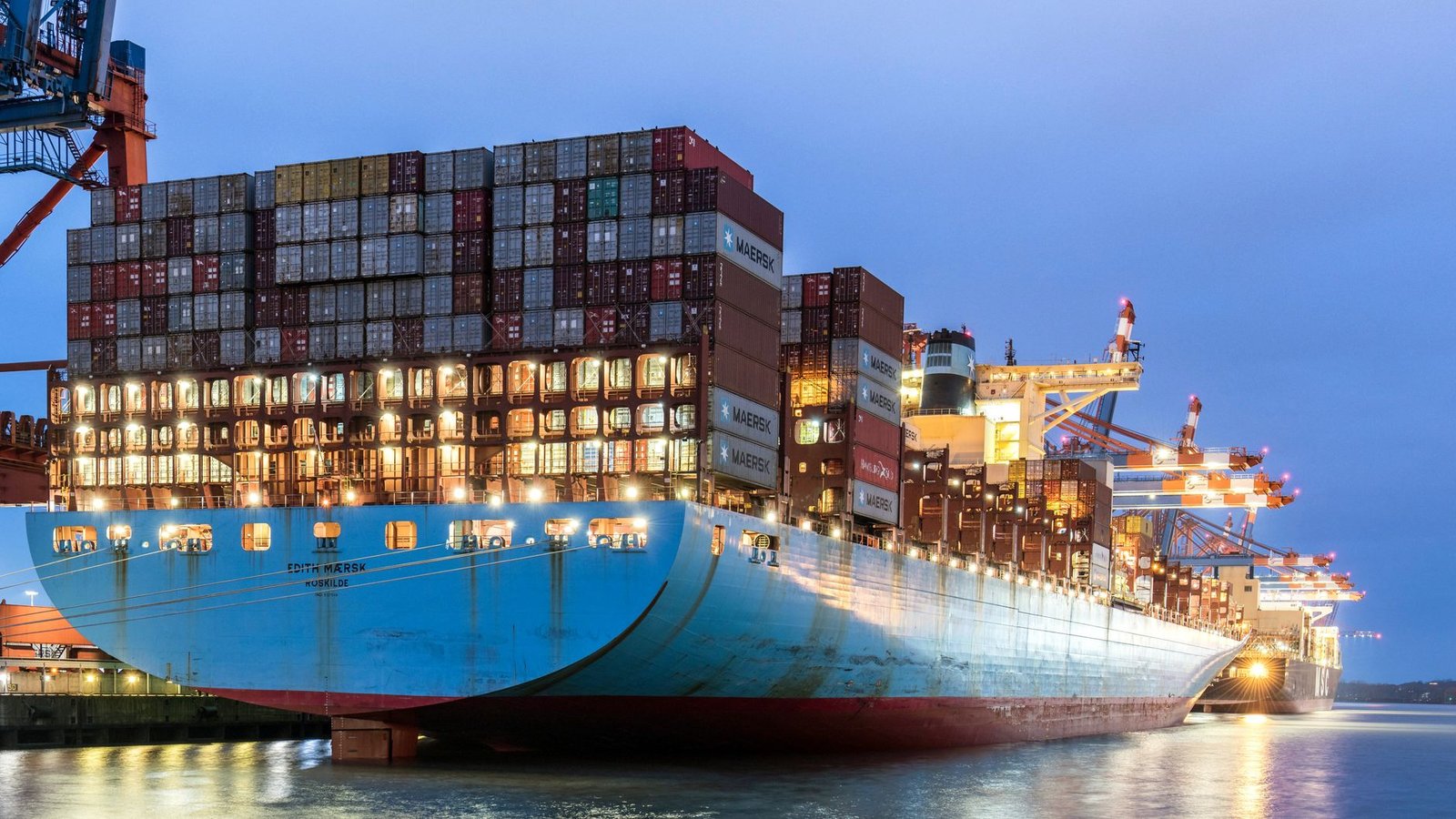
He bought a ship.
That’s K.C. Irving. He started with a small store in a tiny Canadian town and grew it into roughly 300 companies. Shane Parrish told his story on the Outliers series of The Knowledge Project podcast this month.
Here’s the uncomfortable question for every Indian founder, freelancer and D2C brand:
Who controls your costs right now?
Because if it isn’t you, someone else is quietly deciding your margin.
1. The Bottleneck Problem (Bhai, Who’s Holding Your Rope?)
Every business has one.
The courier that raised rates twice this year.
The marketplace that changed its commission overnight.
The one supplier who knows you have no backup.
The ad platform where your cost per click keeps creeping up.
Most of us respond the same way.
We complain.
We negotiate a little.
We accept it.
Translation?
We let a bottleneck set our profit.
Irving had a different reflex.
When someone blocked the road, he built his own.
2. Move One: Too Costly? Own It (Steal This)
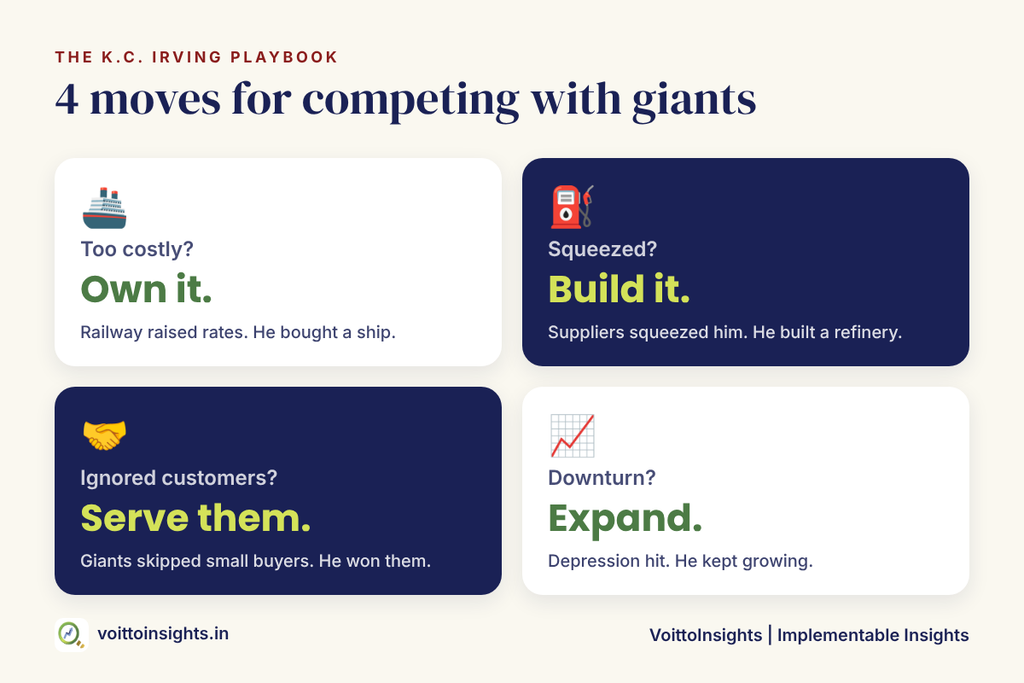
The railway raised his shipping costs.
So he bought a ship.
When oil suppliers tried to squeeze him, he built a refinery.
This is called vertical integration.
Translation? Owning the steps your business depends on, so outsiders can’t dictate your costs.
Whoever controls your input controls your margin.
Now, you don’t need a ship.
The small-business version looks like this:
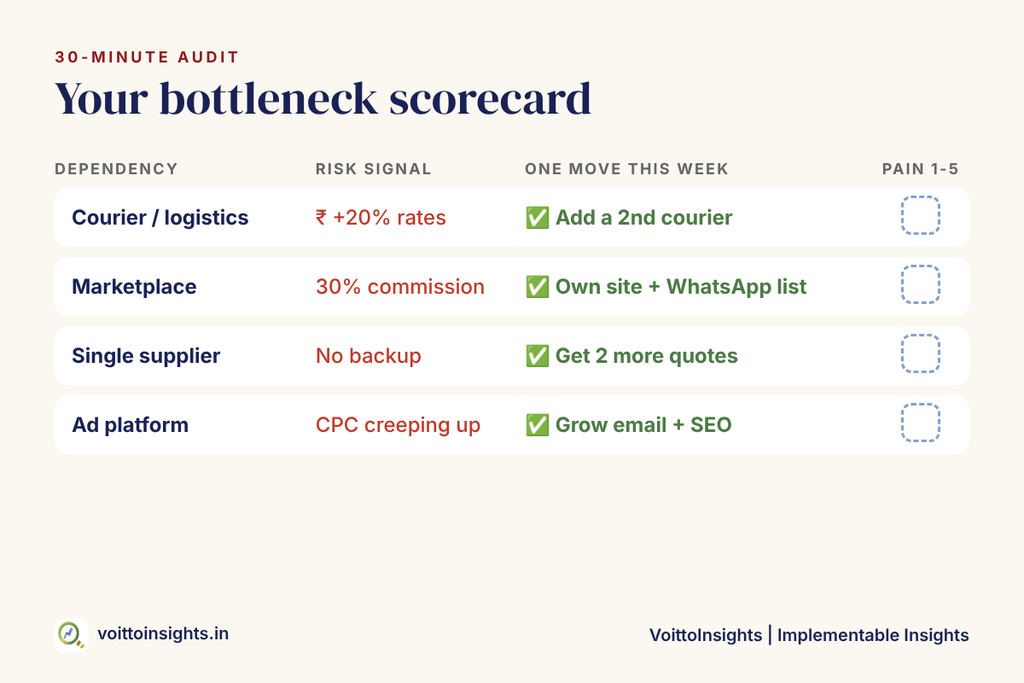
- Your courier keeps raising rates? Sign up with a second one so you have options.
- A marketplace takes 30%? Build your own website and WhatsApp list.
- One designer holds all your files? Get the source files and a backup.
You’re not buying a ship.
You’re buying freedom from one throat to choke you.
3. Move Two: Serve the Customers Giants Ignore
Big companies chase big customers.
That leaves a gap.
Small orders. Small towns. Awkward requests.
Irving won customers that larger competitors overlooked.
The business lesson: your size is not a weakness. It’s your access to customers the giants can’t be bothered with.
The kirana uncle who knows your name beats the app that doesn’t.
The local CA who picks up the phone beats the big firm with a ticket system.
Do this:
List 3 customer types your biggest competitor ignores.
Pick one. Build one offer just for them.
4. Move Three: The Second Call (The Twist)
Here’s the detail I loved most.
Irving would sell a customer oil.
Then he would call again to check it had actually arrived.
Shane says that second call tells you a lot about the man.
This is the twist in the story.
The empire wasn’t built only on big, bold moves like ships and refineries.
It was also built on tiny, boring habits.
Checking. Following up. Caring after the sale.
Most businesses stop at the sale.
Great ones check the result.
Steal this:
After every order, send one message.
“Did it arrive? Is everything okay?”
Simple?
Yes.
Common?
Brutally rare.
5. Move Four: Expand When Others Freeze
When the Great Depression hit, most businesses pulled back.
Irving kept expanding.
Here’s the important distinction:
This isn’t permission to borrow wildly when times are bad.
It’s a reminder that hard times change prices.
Talent is easier to hire.
Rents fall.
Competitors go quiet.
If you have cash and a clear plan, a slowdown can be your best entry point.
Translation?
Fear is loud in a downturn.
Opportunity is quiet.
6. The Mental Model: Treat “No” as a Routing Problem
This is the core idea.
Most people hear “no” and stop.
Irving heard “no” and asked a different question:
“Which other route gets me there?”
Railway said no to fair prices? Route: the sea.
Oil suppliers said no to fair terms? Route: his own refinery.
Big customers ignored him? Route: the customers they ignored.
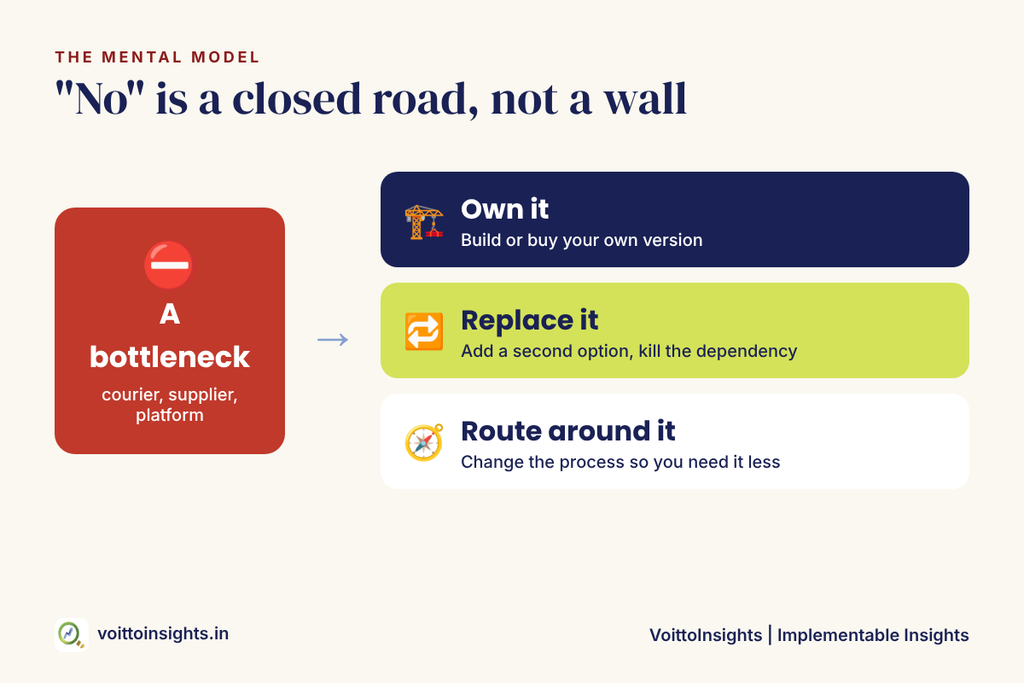
The mental model: “No” is not a wall. It’s a closed road. Find the next road, or build one.
7. The Catch (Nobody Gets Unlimited Power)
Let’s be brutally honest.
Irving’s story isn’t a fairy tale.
As his empire grew, so did the pushback. Unions fought him. Governments eventually tried to rein him in.
So the lesson is not “control everything.”
The lesson is this:
Control the few things that can kill you.
Stay fair with everyone else.
Owning your bottleneck makes you resilient.
Owning everyone else’s makes you a target.
8. Tweet This
- When they block the road, build your own.
- Whoever controls your input controls your margin.
- Most businesses stop at the sale. Great ones check the result.
- “No” isn’t a wall. It’s a closed road.
9. The 30-Minute Bottleneck Audit (Do It Today)
Grab a notebook and a cup of chai.
? Step 1: List the 5 outside parties your business depends on most. Couriers, platforms, suppliers, tools, ad networks.
? Step 2: For each one, ask: if they doubled their price tomorrow, what happens to my profit?
? Step 3: Circle the one that would hurt most.
? Step 4: Pick one move:
- Own it (build or buy your own version)
- Replace it (add a second option)
- Route around it (change the process so you need it less)
? Step 5: Do one small action this week. A call. A quote. A test order.
Start small.
A second courier account is not a ship.
But it’s the same idea.

FAQs
Who was K.C. Irving?
A Canadian entrepreneur who started with a small-town store and grew it into roughly 300 companies, including oil, shipping and many other businesses. Shane Parrish covers his story in The Knowledge Project’s Outliers series.
Isn’t buying a ship or a refinery only for billionaires?
Yes, the size is. The principle isn’t. For a small business, owning a bottleneck can be as simple as a backup supplier, your own customer list, or your own website.
What’s the biggest bottleneck for most Indian small businesses?
Usually one of three: a single marketplace for sales, a single supplier for stock, or one ad platform for customers. Diversifying just one of these makes the business much harder to squeeze.
Where can I hear the full story?
The Knowledge Project podcast by Farnam Street: “[Outliers] K.C. Irving.” Look for the chapter “How He Scaled Up During the Depression” at 27:10.
Final Mental Model
You can’t control every cost.
You can control who gets to set them.
Find your bottleneck.
Own it, replace it, or route around it.
Then make the second call.
If this made you nod, smile, or mildly panic: good.
That’s awareness kicking in.
Use it before your competitor does.
VoittoInsights | Implementable Insights.
Source: The Knowledge Project podcast, [Outliers] K.C. Irving (Farnam Street, November 2026).
Discover more from Voitto Insights
Subscribe to get the latest posts sent to your email.