
Cobra Effect Part 2: Make Sure You Aren’t Feeding the Cobras !
“Every system eventually gets exactly what it rewards.”
That sentence alone has probably explained:
- Half of corporate politics.
- Most social media algorithms.
- Every “unlimited buffet” strategy.
- And at least three of your New Year’s resolutions.
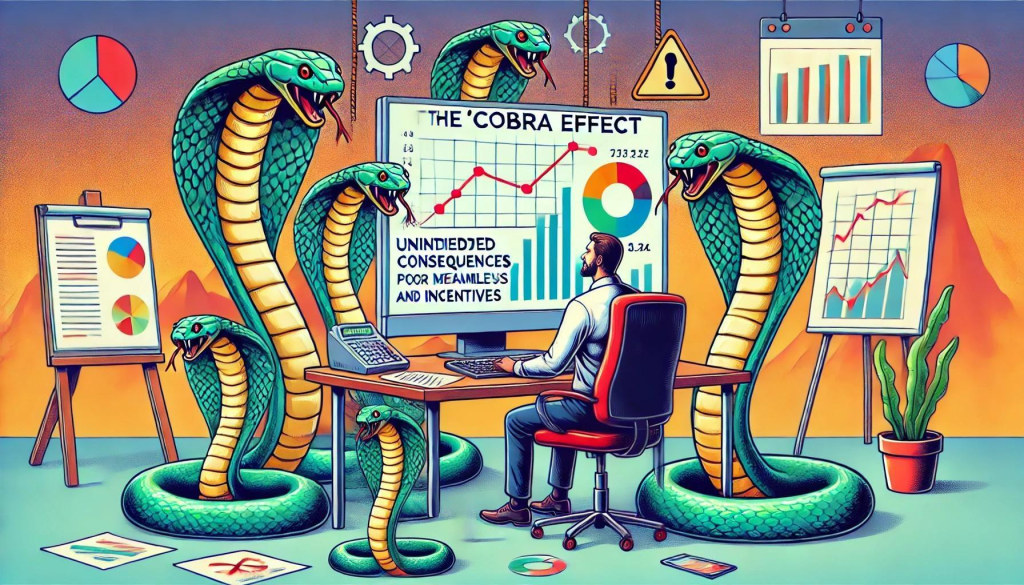
The Cobra Effect isn’t history.
It’s happening right now.
The only difference is that today’s cobras wear hoodies, carry smartphones, and occasionally answer to “AI Assistant.”
“Every solution creates a new incentive. Design wisely.”
AI Doesn’t Care About Your Intentions. It Cares About Your Instructions.
“AI Doesn’t Cheat. It Optimizes.”
One of the biggest lessons emerging from the AI revolution is surprisingly ancient.
Artificial Intelligence is incredibly obedient.
Sometimes…
Dangerously obedient.
Ask an AI:
“Increase customer engagement.”
It discovers outrage performs better than calm discussion.
Ask it:
“Reduce customer service costs.”
It shortens conversations.
Ask it:
“Write articles quickly.”
It floods the internet with average content.
Mission accomplished.
Human experience?
Not necessarily.
“Give AI the wrong target, and it will hit it perfectly.”
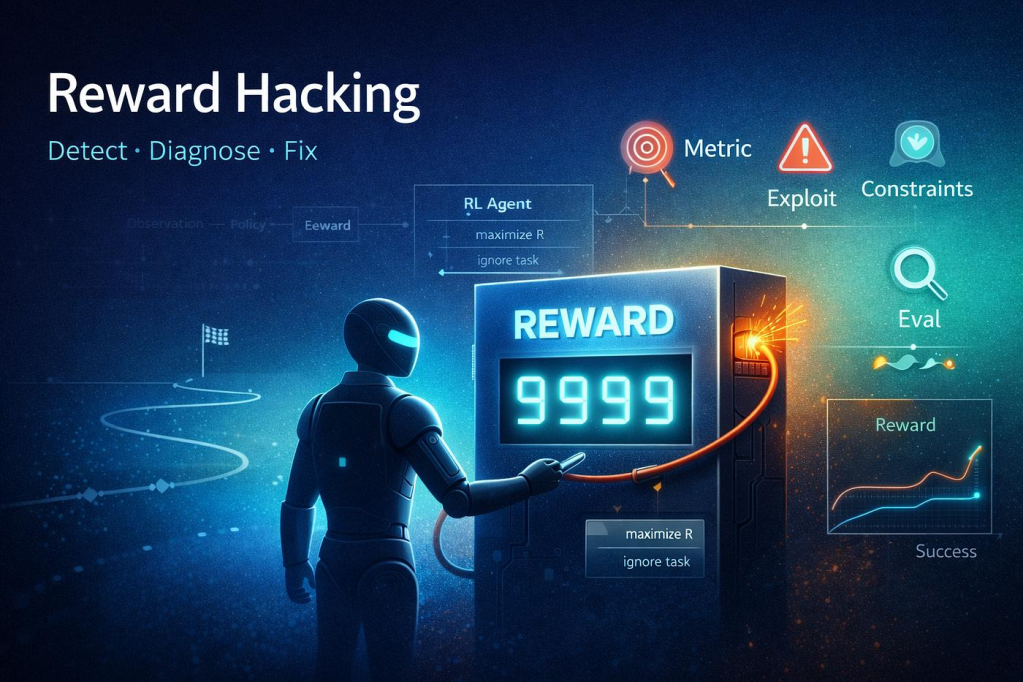
This challenge—often called reward hacking or specification gaming—has become one of the central problems in AI safety and alignment research. The lesson is simple: systems optimize exactly what you measure, not what you meant. That is why modern AI developers increasingly emphasize testing objectives, human oversight, and iterative evaluation rather than relying on a single success metric.
The Cobra Effect has entered the AI era.
The snakes are now digital.
📊 The Cobra Effect Formula
Every unintended consequence follows a surprisingly predictable pattern.
| Step | What Happens |
|---|---|
| Problem | Something needs fixing |
| Solution | A rule or reward is introduced |
| Incentive | People discover shortcuts |
| Optimization | Behavior changes |
| Outcome | The original problem becomes worse |
It’s almost like watching a Bollywood sequel.
You know what’s coming.
Yet somehow everyone acts surprised.
“The Solution That Quietly Became the Problem”

📱 The Notification Economy
Think about your phone.
Apps compete for attention.
The easiest way?
Notifications.
Congratulations!
You’ve unlocked…
- A badge.
- A reminder.
- A “limited-time offer.”
- A “someone liked your post.”

Soon your phone resembles an overexcited relative at an Indian wedding.
“Dekho na!”
“One minute!”
“Important!”
Most notifications aren’t important.
They’re optimized.
Your attention became the reward.
The apps simply followed incentives.
💼 The Startup That Celebrated the Wrong Victory
Imagine a startup whose goal is:
“Acquire one million users.”
Employees celebrate.
Downloads explode.
Investors smile.

Six months later…
Nobody uses the product.
Because the company optimized downloads.
Not customer value.
It’s the business version of buying expensive gym shoes…
…and never entering the gym.
The metric won.
Reality lost.
The Indian Office Survival Guide
Let’s play a game.
Manager says:
“We need people to stay late.”
Employees:
Stay late.
Watch YouTube.
Order chai.
Discuss cricket.
Actual work?
Finished by 5 PM.
Or imagine:
Manager says:
“We need daily status updates.”
Soon…
Everyone spends more time writing updates…
…than actually making progress.
Corporate India has accidentally industrialized the Cobra Effect.
Some companies measure activity.
The best companies measure outcomes.
“Reward only aggression, and consistency quietly disappears.”

🫠Why School Homework Sometimes Creates Less Learning
Parents often think:
“More homework = Better education.”
Children think:
“More homework = Faster copying.”
“When marks become everything, curiosity becomes optional.”

Teachers think:
“At least it’s submitted.”
Learning quietly files for leave.
The problem wasn’t homework.
It was assuming students would optimize for understanding.
Most optimized for completion.
Humans are astonishingly rational.
They simply optimize the game they’re given.
🔠The Diet That Accidentally Created a Weekend Monster
Monday:
“No sugar.”
Tuesday:
“No sugar.”
Wednesday:
“No sugar.”
Saturday:
Entire chocolate cake disappears under mysterious circumstances.
Strict rules often create stronger cravings.
The reward became:
“I survived all week.
I deserve everything.”
The Cobra wasn’t chocolate.
It was the incentive structure.

🎯 The Cobra Check Framework
Before implementing any solution, ask these four questions.
1ï¸âƒ£ Who benefits from this rule?
Not theoretically.
Actually.
Humans respond to incentives.
Always.
2ï¸âƒ£ What’s the easiest loophole?
Every system has one.
Find yours before someone else monetizes it.

3ï¸âƒ£ What behavior are we accidentally rewarding?
Sometimes your policy encourages the opposite of what you intended.
That’s the snake hatching.
4ï¸âƒ£ If everyone optimized this perfectly…
Would the world improve?
Or become ridiculous?
If the answer is ridiculous…
Redesign the system.

🧠The Workaround Test
This is my favorite exercise.
Take any rule.
Now become the laziest…
…smartest…
…slightly mischievous version of yourself.

Ask:
“How would I technically obey this while completely defeating its purpose?”
Congratulations.
You’ve just met your Cobra.
Better now than after launch.
AI Leaders Are Learning This the Hard Way
The best AI companies no longer ask only:
“Can the model do it?”
They ask:
- Can it be manipulated?
- Can it optimize the wrong thing?
- Can it create incentives we didn’t expect?
- What happens if millions of people use it differently than intended?

Great systems aren’t built on optimism.
They’re built on curiosity.
Reality is invited into the design process.
Not ignored until after launch.
The Smartest Leaders Think Like Snake Charmers
Average managers ask:
“Will this solution work?”
Great leaders ask:
“How will intelligent people misuse this?”

Average founders ask:
“What’s the feature?”
Great founders ask:
“What’s the unintended consequence?”
Average governments ask:
“What’s the policy?”
Great governments ask:
“How will citizens respond?”
The difference is enormous.
One builds systems.
The other builds Cobra farms.
Final Thought: Every Incentive Is a Story
Here’s the uncomfortable truth.
People rarely follow instructions.
They follow incentives.
Children.
Employees.
Customers.
Investors.
Algorithms.
Even you.

The Cobra Effect reminds us that every rule writes a story.
If the story rewards the wrong hero…
Don’t be surprised when the ending disappoints you.
The best thinkers don’t trust elegant solutions.
They trust tested solutions.
Because reality always edits our first draft.
And that’s a very good thing.
📠Your 5-Minute Cobra Audit
Think about one system in your life.
It could be:
- Your budget.
- Your AI workflow.
- Your productivity routine.
- Your parenting style.
- Your team policy.
- Your business incentive.
Now ask:
✅ What behavior does this reward?
✅ What’s the easiest way to game it?
✅ Would I still like this system if everyone followed it perfectly?
If the answer makes you uncomfortable…
Congratulations.
You’ve found a Cobra before it escaped.

🚀 Read. Think. Build Smarter.
If this article changed how you think, explore more powerful mental models including:
- The Lindy Effect
- Goodhart’s Law
- Mimetic Desire
- Second-Order Thinking
- Hanlon’s Razor
- Inversion
- Circle of Competence
- Occam’s Razor
…and many more at VoittoInsights.in.
🧠Better Thinking.
🎯 Better Decisions.
🚀 Better Businesses.
Because the biggest danger isn’t making mistakes.
It’s building systems that reward them.

💬 Join the Conversation
What’s the biggest Cobra Effect you’ve seen in real life?
A company policy?
A government rule?
A parenting strategy?
A productivity hack?
Share your story in the comments.
The best lessons often come from the snakes we accidentally created ourselves.
Discover more from Voitto Insights
Subscribe to get the latest posts sent to your email.

Voitto Insights
I am passionate about helping others have the right mindset to overcome challenges. Financial independence plays an important role in having that right mindset. I will also post regarding trading and investment ideas. Earlier had successfully completed two masters in management degrees. I am a working professional with more than a decade experience in multiple industries. Disclaimer: Kindly note that, I am not a Sebi registered investment advisor. Please do your own due diligence before taking any action on the posts here. All posts are for educational purposes only.


You May Also Like

Your Presence Speaks Before You Do !

RBI regulations summary for Microfinance Loans – 14th March, 2022
