Voitto Insights
Most sports fans get four things.
A ticket.
A jersey.
A bet.
A seat in front of the TV.
Ownership? That’s for billionaires.
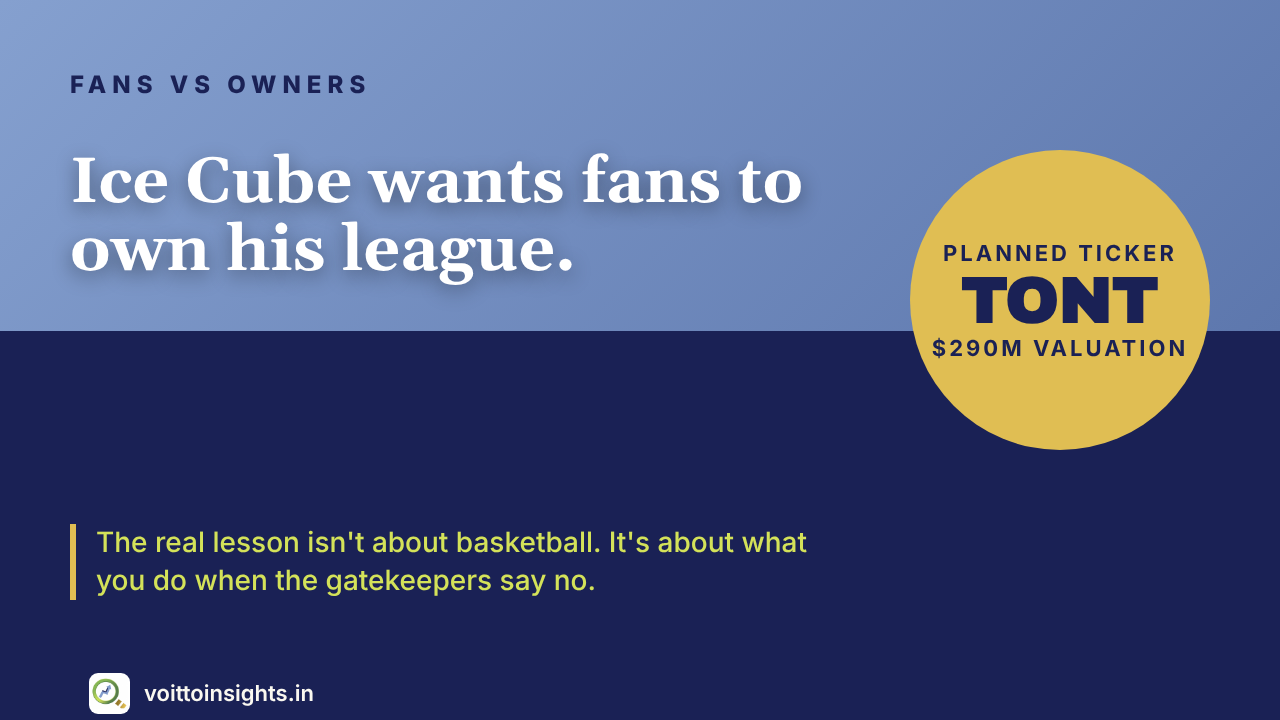
Ice Cube thinks that’s broken. So his basketball league, the BIG3, is going public.
“Most leagues are owned by a bunch of billionaires,” he told Front Office Sports. Fans “can’t invest. We want to change that.”
On 8 November, he sat down with The Motley Fool to explain why.
You’ll want to read this as a sports story.
Don’t.
Read it as a story about what you do when the gatekeepers say no.
1. It Started With a Missed Game (Yes, Really)
Kobe Bryant’s last NBA game. 60 points.
Ice Cube had a box at the Staples Center for about 20 years.
He missed it.
He was in Atlanta, shooting a movie.
That miss stuck with him. He’d had a 3-on-3 league in the back of his mind for years. This was the push.
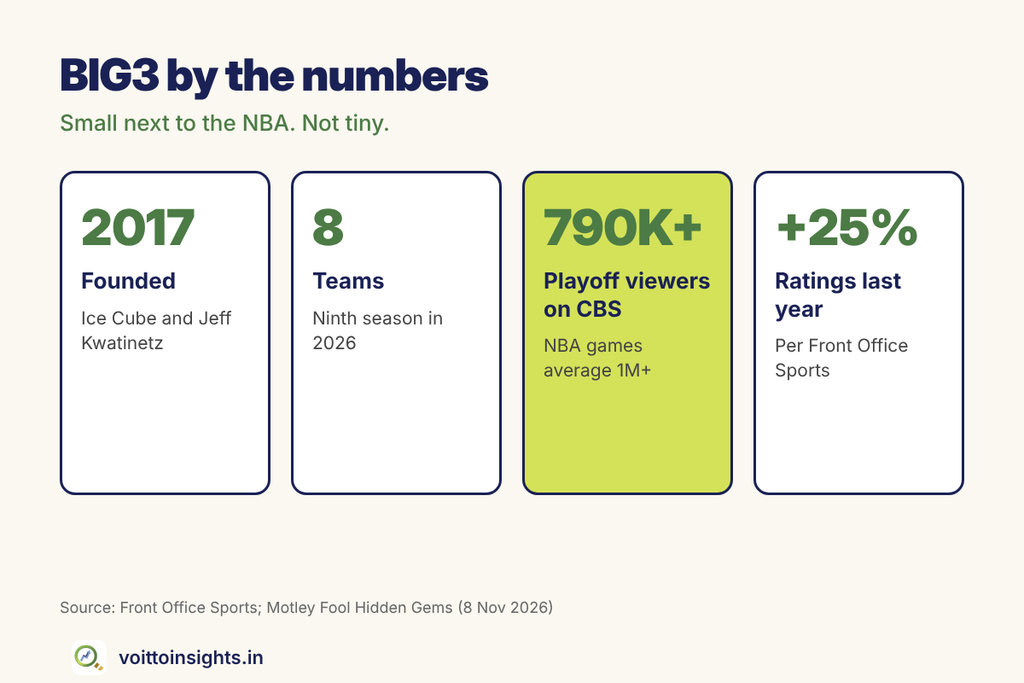
In 2017, he and Jeff Kwatinetz launched the BIG3. Short games. Former NBA players. A summer league for fans who hate the off-season.
The mental shift: he didn’t build a business plan first. He built from a frustration.
Translation? Your best idea might be hiding inside your biggest annoyance.
Jo cheez tumhe chubhti hai, wahi business hai.
2. The Numbers Are Small. And That’s the Point (No Hype)
Let’s be brutally honest about scale.
The NBA regularly averages more than 1 million viewers a game.
BIG3’s playoffs drew more than 790,000 viewers on CBS.
Smaller. But not tiny. And ratings rose more than 25% last year, according to Front Office Sports.
It has eight teams. It’s on its ninth season. It’s on CBS for the seventh year, with reruns on BET and streams in China.
Here’s the important distinction:
The BIG3 isn’t trying to beat the NBA.
It’s trying to own a different game.
Not bigger. Different.
Chhota hai, par apna hai.
3. The Twist: Players Share the Profits (Steal This)
This is the part most people skip.
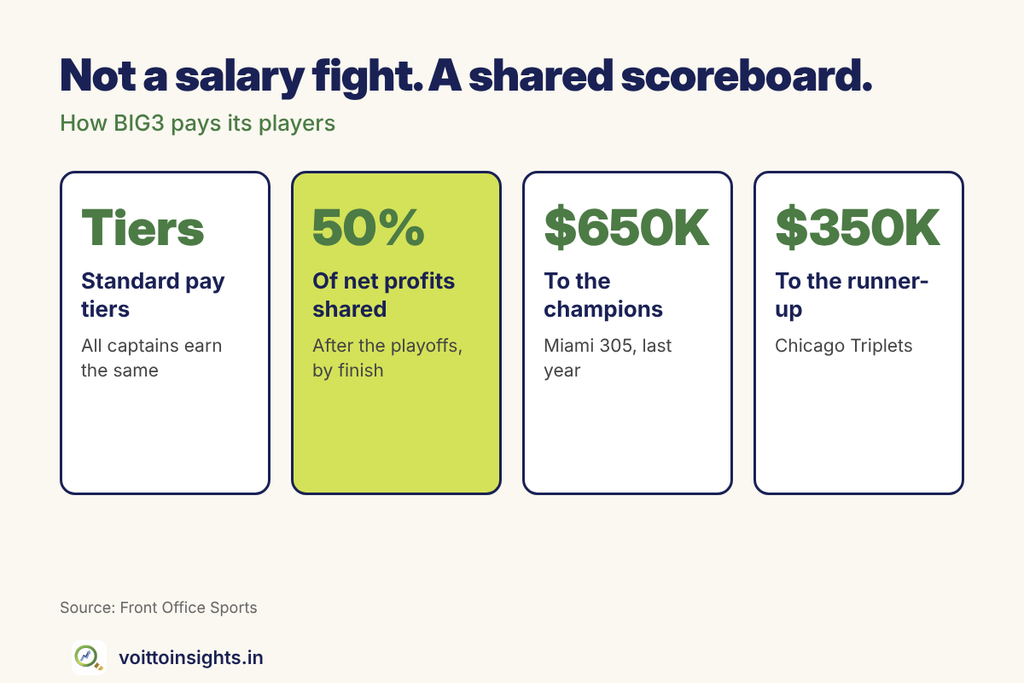
BIG3 players don’t negotiate wildly different contracts. Pay follows standard tiers. All captains earn the same.
Then the twist.
Players share 50% of net profits after the playoffs. The better the team finishes, the bigger its share.
Last year, the first-place Miami 305 took home $650,000. The runner-up Chicago Triplets took $350,000.
Co-founder Jeff Kwatinetz said negotiating different deals for every player makes the game “more about the money and less about wanting to play.”
Read that again.
They didn’t fix motivation with bigger salaries.
They fixed it with a shared scoreboard.
If your team only wins when the company wins, the company stops being “theirs” and becomes “ours.”
Salary se kaam chalta hai. Hissa milne pe dil lagta hai.
4. The Gatekeeper Said No (So He Went Around)
Now the real reason the league is going public.
Money.
Ice Cube says the NBA treats the BIG3 as a “competing league.” That bars NBA team owners from investing in it.
His words: “It has really hampered the growth of the league.”
The NBA denies treating it unfairly. A spokesperson said the NBA simply “declined to invest.”
Either way, the richest people in basketball weren’t writing cheques.
So the BIG3 is going around them.
It plans to list at a $290 million valuation through a merger with Graf Global, a SPAC that raised $200 million in 2024. The ticker: TONT.
Translation? A SPAC is a listed shell company that buys a private business, so the business becomes public without a classic IPO.
When the gatekeeper says no, the crowd might say yes.
Darwaza band? Khidki dhoondo.
5. The Catch Nobody Should Ignore (Brutally Honest)
This isn’t a stock tip. Please don’t read it as one.
SPAC deals have a famous problem.
When the merger closes, many SPAC investors ask for their money back. So the company often gets much less cash than the headline number suggests.
Even the expert Front Office Sports quoted, Jay Ritter, starts there. His view: the BIG3 “has a chance,” if fewer investors pull out than usual.
A chance. Not a promise.
So keep two thoughts at once:
? The idea of fan ownership is powerful.
? The investment itself carries real risk, like any small listed company.
Josh mein hosh mat khona.
I’m not a financial advisor. Nothing here is advice to buy or sell any security.
The Mental Model
Followers watch. Owners stay.
Most creators and founders treat their audience like an audience. They ask for likes, views and shares.
Ice Cube’s bet is different. He’s asking fans to become owners.
You don’t need a stock listing to borrow the idea. Give your best customers a real stake:
- an early-access list
- a vote on what you build next
- a referral share
- a founding-member price that never goes up
The deeper your audience’s stake, the longer they stay.
Tweet This
Most fans get a ticket, a jersey and a seat. Ice Cube wants to give them a share.
BIG3 players split 50% of net profits. Not a bigger salary. A shared scoreboard.
When the gatekeeper says no, the crowd might say yes.
Followers watch. Owners stay.
Your Ownership Scorecard
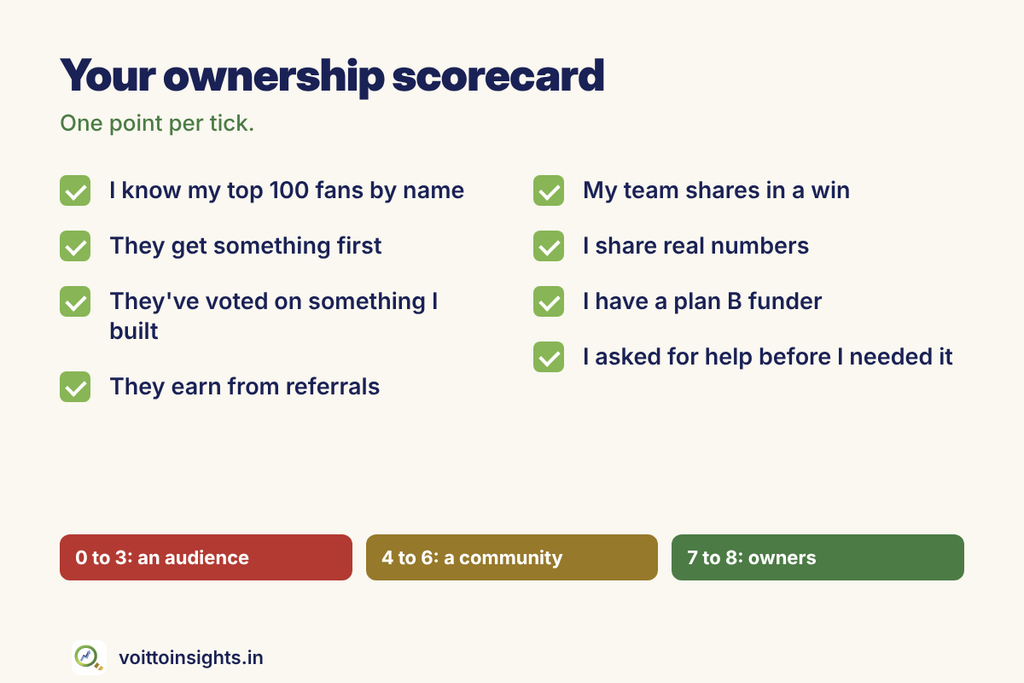
Give yourself one point for every ?.
- ? I know my top 100 customers or fans by name
- ? They get something before everyone else
- ? They’ve had a vote on something I built
- ? They earn something when they refer a friend
- ? My team shares in a win, not only a salary
- ? I share real numbers with my community, good or bad
- ? I have a plan B when one big funder says no
- ? I’ve asked my audience for help before I needed it
0 to 3: You have an audience.
4 to 6: You have a community.
7 to 8: You have owners.
FAQs
What is the BIG3? A 3-on-3 professional basketball league co-founded in 2017 by Ice Cube and Jeff Kwatinetz, featuring former NBA players.
How is the BIG3 going public? Through a merger with a SPAC called Graf Global, at a planned $290 million valuation, under the ticker TONT.
Why can’t NBA owners invest? Ice Cube says the NBA treats the BIG3 as a competing league, which bars its team owners from investing. The NBA says it simply declined to invest.
How do BIG3 players get paid? Standard pay tiers, plus a share of 50% of net profits after the playoffs, split by how each team finishes.
Should I buy the stock? That’s your call, with your own research and advisor. SPACs carry real risk, and many investors redeem their shares when the deal closes.
Final Takeaway
You don’t need a league.
You don’t need a SPAC.
You need people who feel like it’s partly theirs.
Find your first 100.
Give them a stake.
Then build with them, not for them.
VoittoInsights | Implementable Insights.