


- Let’s dive in. Grab your Coffee or Chai. This might feel uncomfortably relatable.
- 1. The Pre-Mortem: Because Why Wait for a Disaster When You Can Imagine One Now?
- 2. The 5 Whys: The CEO’s Version of an Indepth Interrogation
- 3. Decision Tree Analysis: Because CEOs Hate Surprises (Except When Stock Prices Spike)
- 4. Rapid SWOT: The Startup Founder’s Fastest Way to Sound Intelligent in Meetings
- 5. Impact vs Effort Matrix: The Divine Jugaad Compass
- So… What Do CEOs Actually Do When Solving Big Problems?
- Why These Frameworks Work Really Well Here
- Why These Methods Make CEOs Look Like Superhumans
- A Very CEO Worthy Thing to Remember
If you’ve ever watched a CEO glide into a crisis meeting looking calm enough to host a yoga retreat—while inside the company is burning like a Diwali rocket gone rogue—you’ve probably wondered:
“How do these people solve problems so fast… and why do my own problems behave like Ekta Kapoor’s serial villains who refuse to die?”
Welcome to the real problem-solving playbook of CEOs—decoded, desi-fied, and sprinkled with sarcasm strong enough to make your inner overthinker cry sweet tears of recognition.
And yes, just like that recent viral fiasco where a unicorn startup blamed “technical glitches” for everything from missed revenue to missing employees—this article will show you exactly what CEOs actually do when things go downhill faster than an India-Pak match in the 45th over.

Let’s dive in. Grab your Coffee or Chai. This might feel uncomfortably relatable.
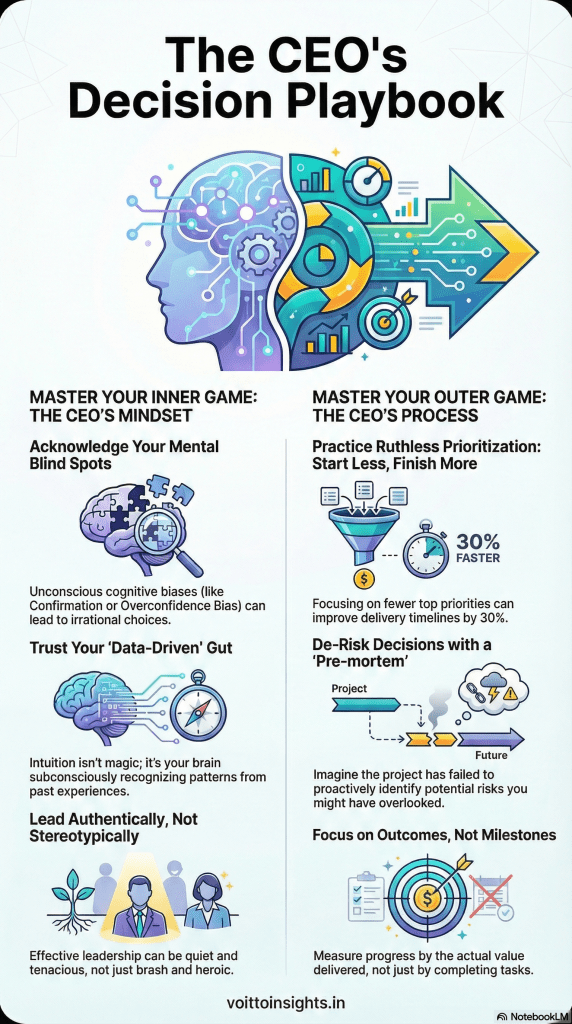
1. The Pre-Mortem: Because Why Wait for a Disaster When You Can Imagine One Now?
Most people do a post-mortem after a project dies. CEOs?
They kill the project before it even starts—mentally, of course.
It’s called a Pre-Mortem Analysis, and it basically goes like this:
“Okay team, assume the whole thing crashed and burned. Why did it fail? Who messed up? Why are investors calling me at 2 AM?”
If Indian households used the pre-mortem method, half of our problems would disappear:
- Planning a Goa trip? Pre-mortem reveals: No one will apply for leave on time. Someone’s cousin’s shaadi will appear last minute. Budget evaporated due to excess Zomato orders. Cancel the trip now—save emotional trauma.
- Buying a house? Pre-mortem reveals: EMI stress will turn you into a motivational speaker against your will.
CEOs use this method to predict risks, dodge disasters, and look impressively psychic during board meetings.
Marketing psychology behind this: Humans fear loss more than they seek gain (loss aversion). CEOs exploit this by pre-scaring themselves. Works like magic.
2. The 5 Whys: The CEO’s Version of an Indepth Interrogation
Every CEO’s secret weapon is something kids survived since they were able to walk and talk:
The “5 Whys” method.
Problem: “We missed our revenue target.”
Why? Sales dropped.
Why? Client churn.
Why? Bad onboarding.
Why? No training.
Why? Because someone said, “Bhai, we’ll manage.”
Sound familiar?
Moms invented this centuries ago:
“Why are your grades low?”
“Why didn’t you study?”
“Why were you on the phone?”
“Why is that girl/boy distracting you?”
“WHY WERE YOU EVEN BORN IF YOU CAN’T SCORE ABOVE 90?!”
CEOs simply replaced judgment with data (Very often).
Psychology insight: Asking successive “whys” forces pattern recognition. Humans are terrible at identifying root causes unless pushed. CEOs push and it may annoy the team. The resulting answers are not digested easily.
3. Decision Tree Analysis: Because CEOs Hate Surprises (Except When Stock Prices Spike)
Decision trees are like those “Choose Your Own Adventure” books—except the wrong choice here can cost crores, not imaginary dragon battles.
A CEO basically maps options like a cricket captain planning the 19th over:
Option A: Delay launch → Save costs → Lose momentum → Investors frown.
Option B: Launch anyway → Bugs everywhere → Twitter roasts you → Investors frown harder.
No wonder CEOs look permanently tired. They’re mentally simulating 27 realities before breakfast.
Your Desi version?
When your parents evaluate arranged marriage profiles:
- IT job → Stable → But maybe boring → But stable.
- Business family → Rich → But risky → But rich.
- NRI → Perfect → Until they hear “Canadian PR pending.”
Decision tree. Every. Single. Time.
Psych insight: Humans simplify choices; CEOs don’t. They externalize complexity through trees, reducing cognitive load.
4. Rapid SWOT: The Startup Founder’s Fastest Way to Sound Intelligent in Meetings
SWOT is usually long, boring, and makes interns cry.
But Rapid SWOT? That’s CEO espresso with all cylinders on fire.
Fast questions:
- What are we good at?
- What sucks?
- What’s the market giving us?
- What’s the market trying to slap us with?
This helps CEOs quickly decide:
- Should we pivot?
- Should we invest more?
- Should we pretend everything is fine until after the funding round? (Common tactic.)
We use Rapid SWOT all the time:
- Choosing which queue at the supermarket will move fastest (spoiler: the one you pick never does).
- Deciding whether to take the expressway or the “shortcut” Google Maps promises (spoiler: regret).
Psych insight: Rapid analysis reduces decision paralysis. Speed beats perfection.
5. Impact vs Effort Matrix: The Divine Jugaad Compass
Every CEO worships this one matrix.
It’s the spiritual successor to “Kaam kam, result zyada.” (Less work, more results)
Plot tasks on a grid:
- High impact, low effort: Do immediately. Show off in meeting.
- High impact, high effort: Create project plan. Delay slightly.
- Low impact, low effort: Delegate to that enthusiastic intern.
- Low impact, high effort: Delete from existence.
We naturally use this matrix:
- Cleaning room before guests arrive? High impact, low effort—go for it.
- Cleaning the wardrobe? Low impact, high effort—close the door and walk away.
- Calling relatives back? High effort, low emotional impact—ignore.
- Rewatching Lagaan for the 18th time? Low effort, high emotional impact—YES.
Psych insight: People procrastinate because they confuse effort with importance. CEOs don’t. They know that results only matter.
So… What Do CEOs Actually Do When Solving Big Problems?
They don’t magically “think smarter.”
They just:
- Ask sharper questions
- Remove emotional drama
- Break complex messes into simple frameworks
- And imagine failure before it shows up like an uninvited baraati
The rest?
Mostly confidence, caffeine, and convincing everyone they had the plan all along.
Why These Frameworks Work Really Well Here
Because life itself is a masterclass in problem-solving:
- Surviving New York/Bengaluru traffic is decision-tree analysis in real time.
- Bargaining with auto drivers is rapid SWOT.
- Navigating office politics is pure 5 Whys.
- Planning a wedding is pre-mortem + impact/effort matrix + divine intervention.
- And Chess? The greatest laboratory of strategic thinking that was ever created.
CEOs simply formalize what we have practiced since childhood.
Why These Methods Make CEOs Look Like Superhumans
Because the average person reacts to problems emotionally.
CEOs respond structurally.
Emotion says:
“OMG everything’s broken. I need biryani.”
Frameworks say:
“What broke? Why? What’s the smallest lever that fixes the biggest issue?”
This combination builds authority, trust, and momentum—three things people psychologically gravitate toward.
You follow the person who looks like they have a map, even if the map is drawn on a napkin.
A Very CEO Worthy Thing to Remember
Most problems aren’t solved with genius.
They’re solved with clarity.
And clarity isn’t a mood.
It’s a method.
Use these five frameworks and watch how fast people start saying:
“Wow… you think like a CEO.”
Just smile. Don’t tell them your real secret:
You simply stopped solving problems like a Bollywood hero chasing villains in slow motion—and started solving them like a strategist who refuses to let chaos win.
If this article shifted your perspective, Please buy me a coffee, subscribe, share, comment, or like/clap.
Check out the free library here –Free Library — Voitto Insights
Click for exciting curated offers –linktr.ee/voittoinsights
For more insightful articles visit voittoinsights.in.
Nothing satisfies me more than helping you achieve your true potential.